nl
nl  en
en 
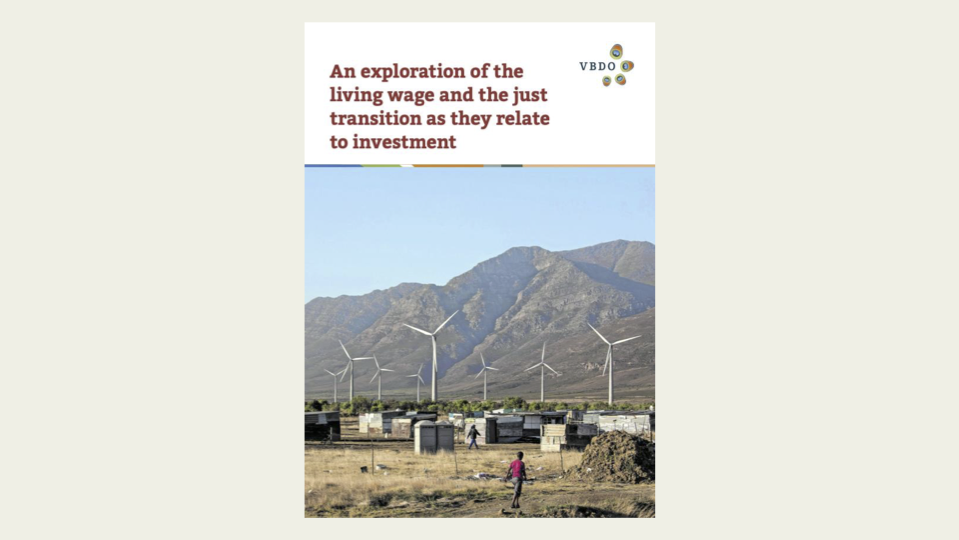
On Human Rights Day, VBDO publishes its latest investor study on living wages and the just transition. Although investors increasingly recognise the importance of living wages, our research shows that integration in policies and engagement strategies remains limited and fragmented. This is a missed opportunity: living wages are an enabling right at the foundation of social resilience, business continuity and equitable transitions.
Living wage: more than a social issue
The International Labour Organization’s 2024 definition brought long-needed clarity to businesses, governments and investors. A living wage goes beyond minimum wage compliance. It enables access to healthcare, education and decent housing. Despite this broad relevance, investors mostly position living wages within business and human rights frameworks – rarely linking it to climate action, just transition, or systemic risk resilience.
Recognition is high, implementation is low
Most institutional investors acknowledge the moral and financial case for living wages. They understand that underpayment contributes to inequality, supply chain instability and reputational risk. However, competitive pressures between companies and across jurisdictions continue to suppress wages. Investors also highlight practical barriers: inconsistent standards, limited data, and constrained ESG capacity.
Sovereign engagement: widely supported, hardly practised
Our research shows that investors see potential for sovereign engagement to advance living wage policies. Yet only a handful act on this insight. This inconsistency suggests that investors recognise their leverage but lack strategic direction — pointing to a need for clearer expectations, collaboration and guidance.
Towards a just transition
The link between living wages and the just transition is widely acknowledged but seldom operationalised. Investors tend to see living wages as a supporting element rather than an outcome of transition planning. To ensure climate and energy transitions do not deepen inequality, living wages must be treated as a core transition pillar, not an adjacent topic.
Call to action
Living wages represent both a moral imperative and a financial necessity. Investors have the rationale, influence and instruments to drive progress — through corporate engagement, public policy dialogue, and integration into stewardship frameworks. What is needed now is consistency, shared learning and scaling of successful practices.
This study aims to support that process by mapping investor views, challenges and opportunities. Together with partners and practitioners, VBDO will continue to strengthen knowledge, build capacity and encourage alignment – ensuring living wages become a driver of dignified livelihoods and future-proof economies.